⚓ Navigating by nature, Packing for a flotilla, & Gnomad Rum cake 🌊🍷
🌌⛵ Navigating by Nature:
😂⛵How the Polynesians Conquered the Pacific Without GPS! 🌊🤣
⭐ No satellites. 🌊 No chartplotters. 🧭 No autopilot. Just stars, swells, seabirds, and generations of knowledge! Welcome to navigation before batteries! 😂
Imagine sailing thousands of miles across the Pacific toward a tiny island with no GPS, no electronic charts, and no little blue dot showing where you are!
Sounds like a recipe for a very long swim! 🏊♂️ Yet Polynesian navigators crossed vast stretches of the Pacific using an extraordinary understanding of nature. They didn't rely on luck. They learned to read the ocean like a book! 📖🌊
⭐ 1. The Stars: Nature's GPS
Polynesian navigators memorized where particular stars rose and set along the horizon, using them to maintain direction throughout a voyage. They also learned how star positions changed with the seasons.
🌟 Try finding the North Star!
In the Northern Hemisphere, Polaris sits almost directly above the North Pole, making it a handy guide to true north.
- 🥄 Find the Big Dipper, shaped like a saucepan or ladle.
- 👆 Locate the two stars forming the outside edge of its bowl.
- ✨ Imagine a line through these stars, extending about five times their separation. You'll reach Polaris, the North Star.
- 🧭 Face Polaris and you're looking approximately north!
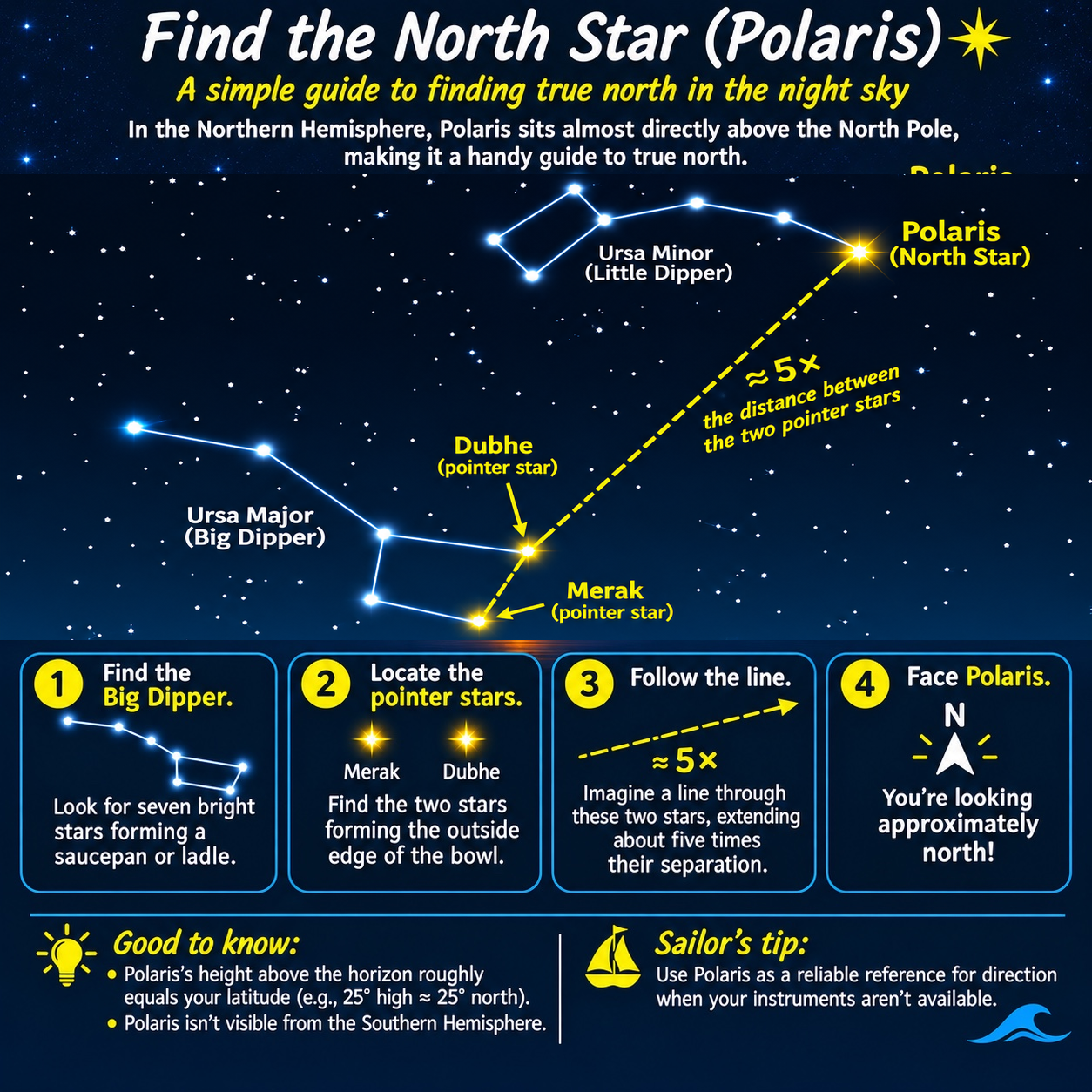
Bonus sailor's trick: Polaris's height above the horizon roughly equals your latitude. If it's 25° high, you're approximately 25° north.
Remember, Polaris isn't visible from the Southern Hemisphere, so Pacific navigators needed a much broader celestial toolkit. 🌌
🌊 2. Reading the Ocean's Secret Language
The ocean carries information if you know how to interpret it!
- 🌊 Long swells: Often travel far beyond the storms that created them, helping sailors identify prevailing wave directions.
- 🧭 Cross-swells: Waves arriving from different directions can reveal changes in sea conditions and help experienced navigators maintain orientation.
- 🏝️ Island effects: Land can reflect or disrupt swells, creating subtle clues about nearby islands.
- 💨 Wind waves: Short, choppy waves often reflect local wind conditions, unlike longer ocean swells.
⚓ Try this: Watch the larger swell patterns for several minutes. Compare their direction with the wind and your vessel's heading. Then check your observations against your charts and instruments.
Waves are useful clues, but currents, reefs, and reflected waves can fool you. Never rely on them alone!
🐦 3. Birds: Feathered Navigation Aids
Birds can offer clues about nearby land, provided you know your species!
- 🐦 Terns and noddies: Some return to islands to roost at night. Birds heading purposefully toward a common point near dusk may indicate land in that direction.
- 🪶 Frigatebirds: Can travel far offshore, so seeing one doesn't necessarily mean land is close.
- 🐟 Feeding seabirds: May indicate baitfish or larger predators beneath the surface, rather than an island.
👀 Watch their behaviour, not just their presence. Repeated flight in one direction or birds returning toward the same area at dusk can be useful observations. Species and seasons matter, so treat these as clues, not guarantees.
☁️🌩️ 4. Reading the Weather
Before satellite forecasts, sailors watched the sky. We can still learn plenty from it today!
- ☁️ Towering clouds: Growing cumulus clouds can develop into thunderstorms, particularly in warm, humid conditions.
- 🌩️ Dark squall lines: May bring sudden gusts, heavy rain, lightning, and rapid wind shifts.
- 🌬️ Changing winds: A sudden shift or increase in gusts can signal an approaching squall or changing weather system.
- 📉 Falling barometer: Sustained falling pressure can indicate an approaching weather system.
- 🌊 Building seas: Increasing wave height and steeper, more frequent breaking waves can warn of deteriorating conditions.
🏴☠️ Tropical tip: Reef early when threatening squalls approach. Secure loose gear and consult reliable marine forecasts. The sky is useful, but it's no substitute for proper weather information!
🛶 5. Hōkūleʻa: Ancient Skills, Modern Inspiration
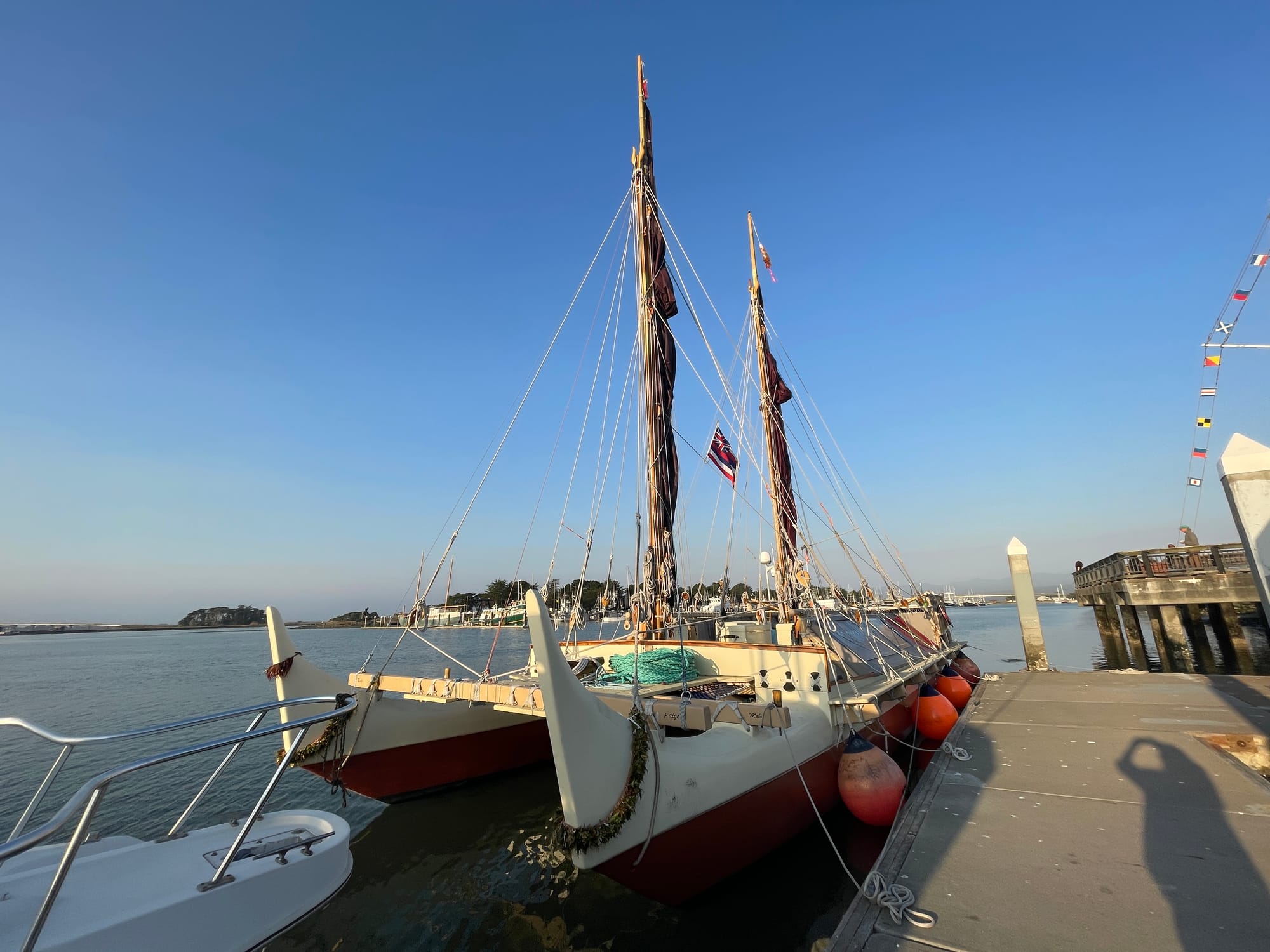
In 1975, the Polynesian Voyaging Society launched Hōkūleʻa, a traditional-style double-hulled voyaging canoe.
In 1976, under master navigator Mau Piailug, it sailed from Hawaii to Tahiti using traditional navigation techniques. 🎉
The voyage helped demonstrate the extraordinary capabilities of traditional wayfinding and renewed interest in Polynesian voyaging knowledge.
These skills weren't learned overnight. They were passed down through oral traditions, practical training, careful observation, and generations of experience. No downloadable navigation app required! 😂
💡⚓ 6. The G~Man's Navigation Challenge
Today, we've got GPS, radar, AIS, electronic charts, and enough cockpit screens to make a spaceship jealous! 🚀 But batteries fail, antennas break, and chartplotters occasionally have a bad day.
Build your resilience:
- 🗺️ Practise using paper charts and dead reckoning.
- ⭐ Learn basic celestial navigation.
- 🌊 Observe swells, wind, and currents.
- 🐦 Recognize local seabirds and their behaviour.
- ☁️ Learn to spot deteriorating weather.
- 🔋 Carry backup power and independent navigation tools.
The big lesson? Technology expands your capabilities, but knowledge gives you resilience when technology fails. 💪
🏴☠️ Your challenge: If every electronic display went black tomorrow, could you establish your position, maintain a course, recognize dangerous weather, and find your way home?
Fair winds, sharp eyes, and may your batteries always be charged! 🔋😂
The G~Man ✌️❤️⛵
Add a stronger Polynesian navigator focusInclude a practical onboard exercise
Packing for a Flotilla
When packing for a 7–10 day sailing adventure, remember:
- Lay everything out. 👕👖👟
- Remove half of what you laid out. ✂️
- Remove half of what is left. 😂
- NOW pack! 🎒
Seriously, space aboard a sailboat is precious real estate. Your cabin may look roomy when you first arrive, but once eight people bring their belongings aboard, every square inch suddenly becomes prime waterfront property! 🚤😂
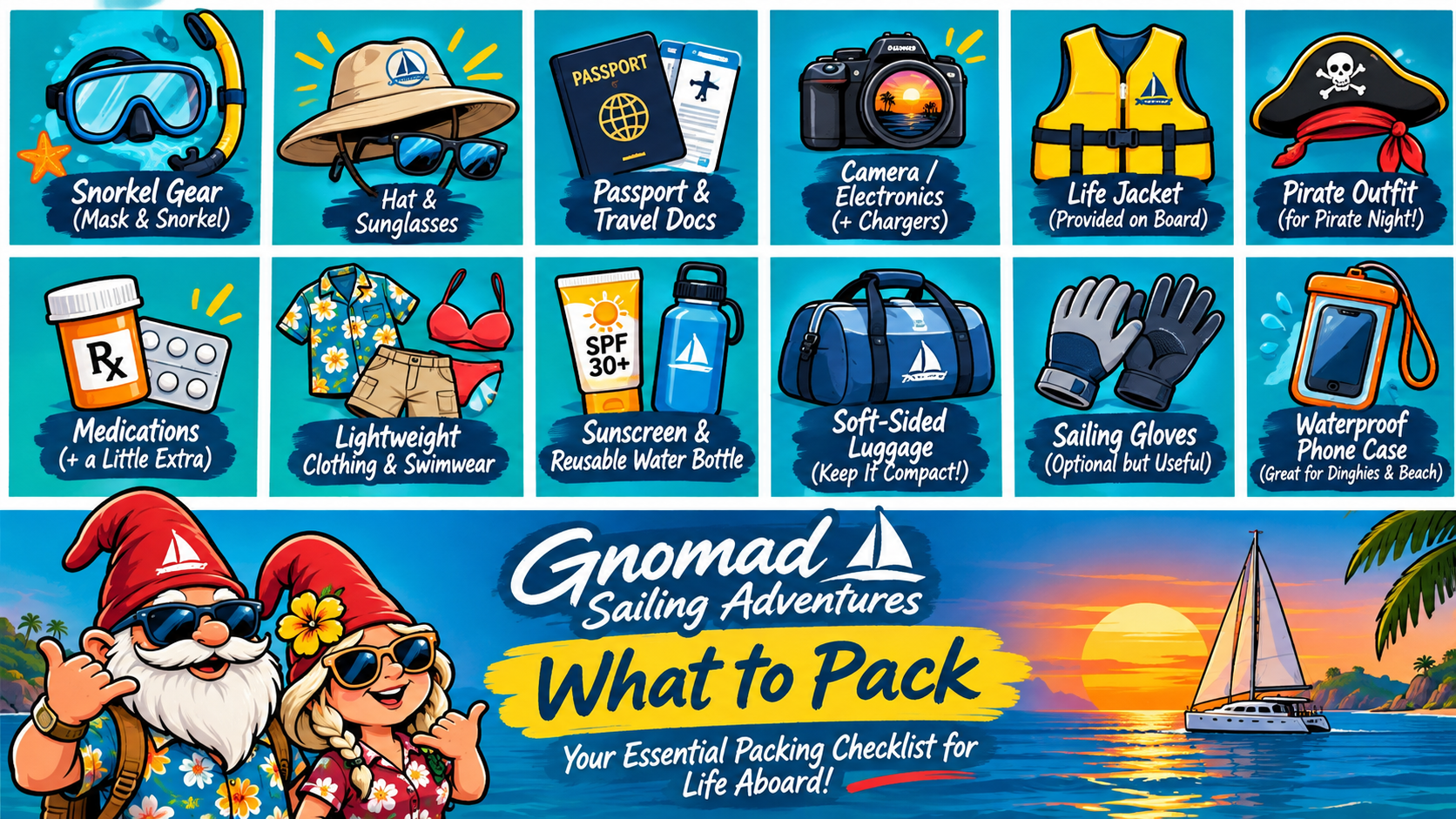
🧳 Think Small & Soft
Whenever possible, use soft-sided, collapsible luggage or even a good-sized cooler bag as your luggage.
Hard suitcases are wonderful at home and spectacularly inconvenient on a sailboat. They don't fold, squish, or disappear when empty. Soft bags can be tucked into lockers, under bunks, or folded away once you've unpacked.
Please don't bring multiple giant suitcases. Your fellow crew members will thank you! 🙏😎
💍 Leave the Bling at Home!
That expensive watch, diamond necklace, or your favorite pair of fancy earrings? Leave them safely at home! 🏠💎
We're going sailing, swimming, snorkeling, hopping ashore, and generally living the salty life. 🌊🏝️ Between sunscreen, seawater, sandy beaches, and the occasional disappearing act overboard, expensive jewelry is an unnecessary risk.
You really don't want to watch your grandmother's diamond ring make a one-way trip to Davy Jones's Locker! ☠️💍😂
✨ So, what should you wear instead?
- 🪸 Costume jewelry: Colorful, inexpensive pieces that won't break your heart if they go missing.
- 🐚 Beach-inspired accessories: Shell necklaces, wooden beads, woven bracelets, or colorful friendship bracelets.
- 🌈 Silicone rings: Comfortable, lightweight, and ideal for an active sailing holiday.
- 🪢 Cord or rope bracelets: Nautical, casual, and perfectly suited to life aboard.
- 🕶️ Inexpensive sunglasses: Because the sea has a remarkable appetite for things that fall overboard!
- ⌚ A basic sports watch: Practical for checking the time without worrying about damaging an expensive timepiece.
⚠️ A quick safety tip: Even inexpensive jewelry can snag on lines, fittings, or other equipment. Remove rings, bracelets, and necklaces when handling lines, swimming, or doing anything where they could catch.
Bring accessories that let you express your personality without worrying about them. The goal is to enjoy the adventure, not spend the week guarding your valuables!
Remember: We're chasing sunsets, not searching the seabed for lost diamonds! 🌅⚓💙
📋 The Essentials
🛂 Passport & Travel Documents
Passport, copies of important documents, travel information, insurance information, and anything else required for your journey.
Keep your important documents somewhere safe and accessible. 📑✈️
💊 Medications
Bring enough for the entire trip, plus a little extra. Keep important medications somewhere easily accessible rather than buried at the bottom of your bag.
💧 Reusable Water Bottle
A bottle that can go into the refrigerator or freezer is particularly useful. Staying hydrated in the sun and salt air is important! ☀️🌊
🧴 Personal Toiletries
Shampoo, soap, toothbrush, toothpaste, deodorant, personal medications, etc.
Keep it simple. You're going sailing, not opening a floating spa! 😂🛁
👕 What to Wear ☀️
Think light, breathable, comfortable, and practical.
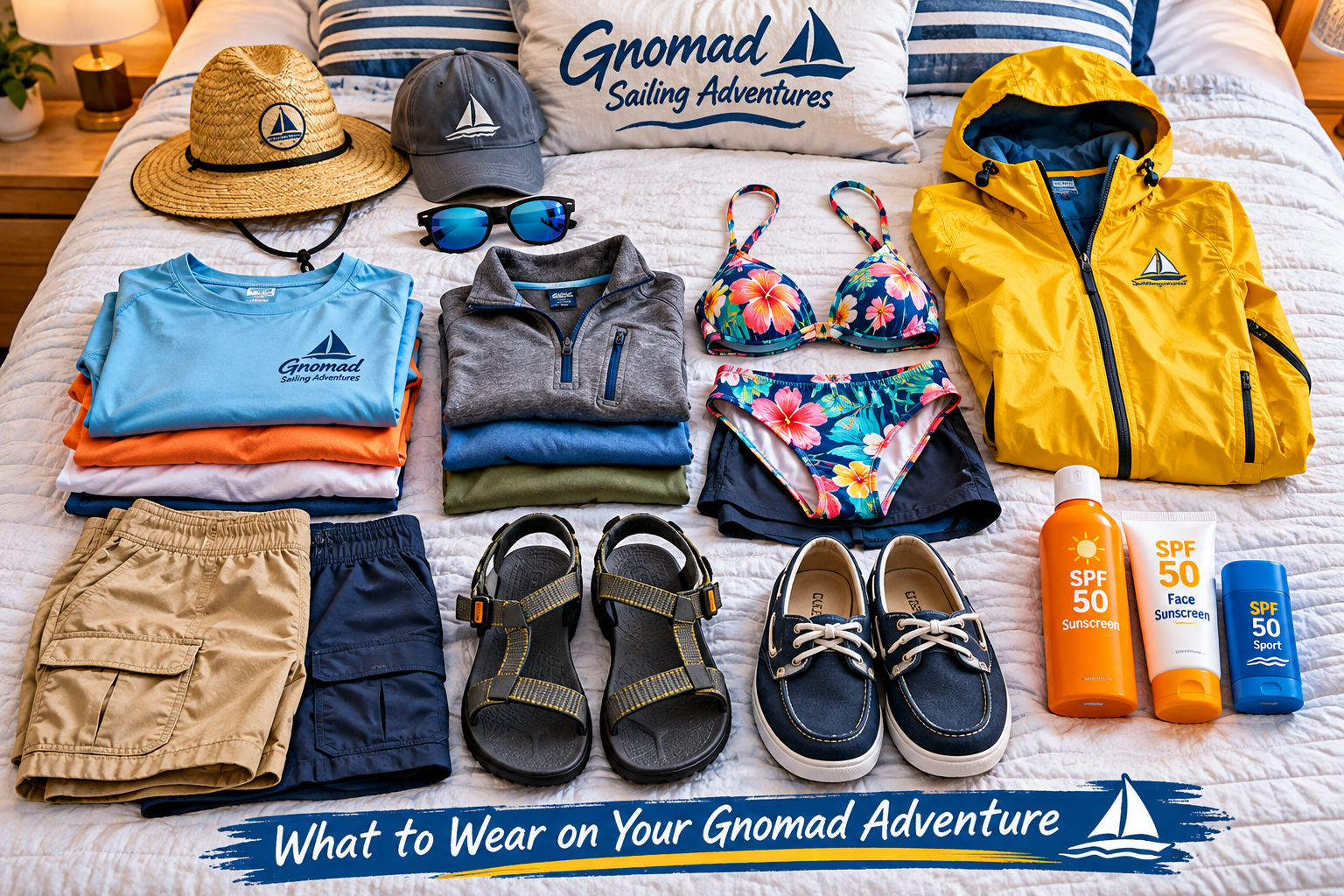
- 👕 Lightweight shirts and shorts
- 👙 Bathing suits
- 👚 A few lightweight layers
- 🩴 Comfortable sandals or boat-friendly shoes
- 🧥 Lightweight rain jacket or windbreaker
- 🧢 Hats that actually stay on your head
- 🕶️ Sunglasses
- 🧴 Plenty of sunscreen
You will probably wear your favorite things repeatedly. That's perfectly acceptable aboard a boat. Nobody is keeping score! 😂
😎 Pro tip: A hat with a chin strap may not win any fashion awards, but when the wind picks up, it suddenly becomes haute couture. 💨🧢
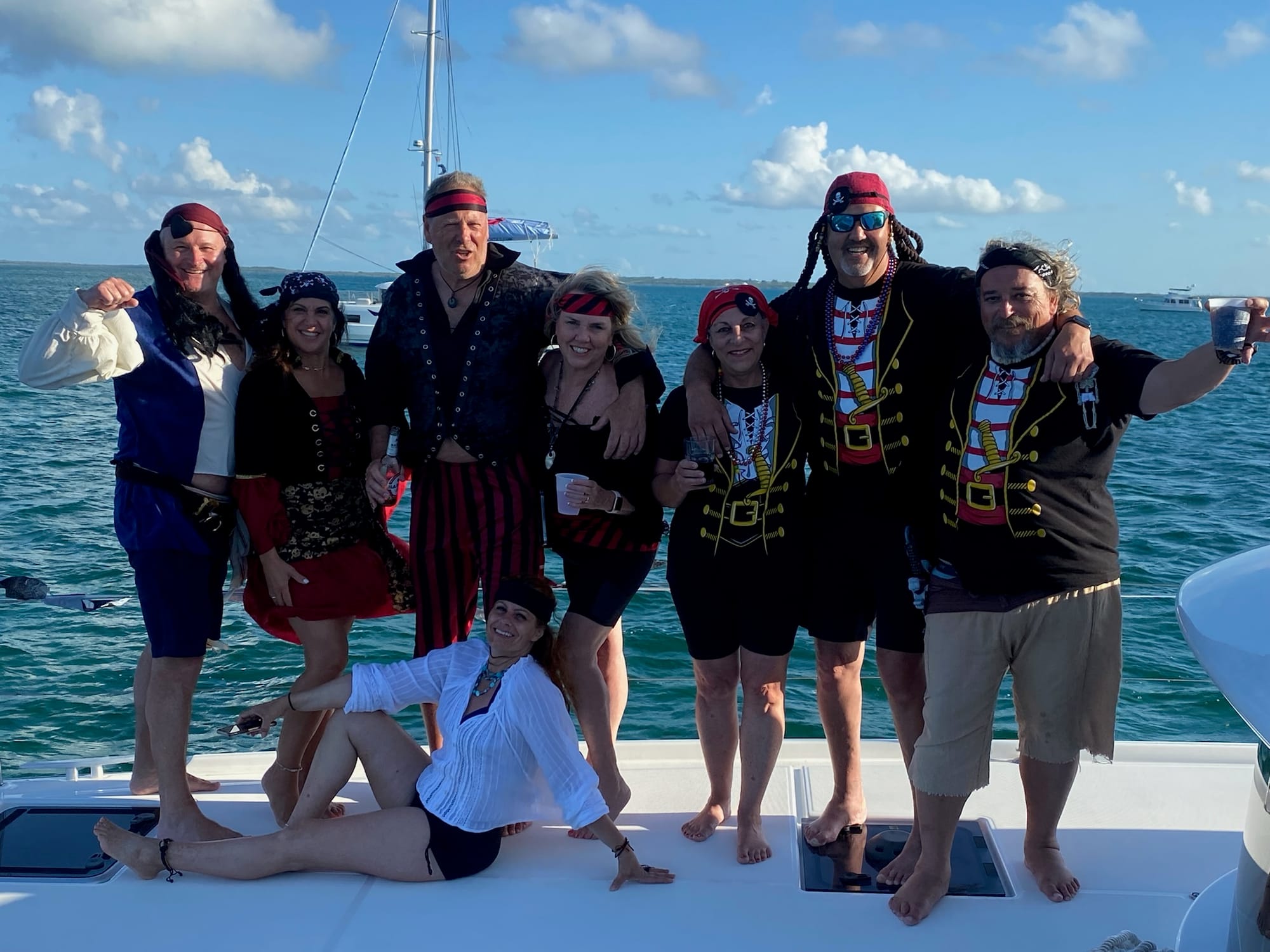
🏴☠️ Pirate Night! Arrr, Matey! ☠️🍹
Every good Gnomad adventure deserves a little pirate spirit, so pack a pirate outfit for Pirate Night! 🦜⚓
Think eye patches, bandanas, pirate hats, striped shirts, skull-and-crossbones accessories, or whatever outrageous seafaring getup takes your fancy. 🎩💀
Go full Captain Jack Sparrow, channel your inner Blackbeard, or keep it simple with a bandana and a suitably suspicious grin. 🥸🍻
There may be prizes, plenty of laughs, and some questionable pirate accents along the way! 😂
The rule is simple: the more ridiculous, the better! Arrr, we be lookin' forward to seeing what ye bring aboard! ⚓🏴☠️🍹
🔌 Electronics 📱📸
Bring your phone, tablet/iPad, camera, e-reader, or whatever keeps you connected to the outside world.
And don't forget your chargers! 🔋🔌
There is a USB charging port in each cabin, plus four USB ports in the saloon, so you should have plenty of opportunities to keep your devices alive.
That said, this is a sailing adventure. Don't be surprised if your phone spends more time taking pictures than scrolling social media! 📱📸🌊
🤿 Snorkeling & Sailing Gear ⛵
🤿 Snorkeling
Bring your own mask and snorkel if you have them and prefer your own gear.
The boats provide fins, but DO NOT provide masks or snorkels.
If you have personal snorkel equipment that fits you well, bring it! 🐠🐟🐢
⛵ Sailing Gear
You do not need to outfit yourself like you're competing in the America's Cup. 🏆
We're sailing coastal waters for a week or so, not crossing the Southern Ocean! 🌊🌍
A pair of sailing gloves can be useful, especially if you're new to handling lines. 🧤 Beyond that, keep specialized sailing gear to a minimum unless you already own it and know you'll use it.
🚫 Spearfishing & Weapons 🏴☠️
Spear poles only. No spear guns, firearms, or anything with a trigger or gas-powered mechanism.
Honestly?
Leave the weapons at home! 😂
We're here to sail, swim, explore, eat ridiculously good food, drink something cold, and occasionally argue about where the rum disappeared to. 🏴☠️🍹🍻
🌴 Pack Light. Live Large! ⚓
The best thing you can bring aboard isn't another pair of shoes. 👠👟
It's curiosity, a sense of adventure, and a willingness to get involved! 🤩🧭
You'll be living outdoors, swimming, sailing, exploring little villages, enjoying beach bars, and watching sunsets from the cockpit. 🏝️⛵🍹🌅
Nobody cares if you wore the same shorts three days in a row.
They probably did too! 😂👕
So pack light, leave room for the unexpected, and remember:
The less stuff you bring aboard, the more room you have for adventure! 🌊⚓❤️
See you aboard, sailors! 🏴☠️⛵🍹🌴
Recipe Section
🌴Gnomad Castaway Rum Cake⚓
Rum, Lime & Toasted Coconut Bundt Cake
Because every good sailing adventure eventually ends with someone saying, “Does anyone have more rum?” 🏴☠️🍹
I took the classic Bacardi Rum Cake and gave it the Gnomad island treatment: toasted coconut, fresh lime and a little pineapple bring the tropical flavor without turning the cake into a complicated galley project.
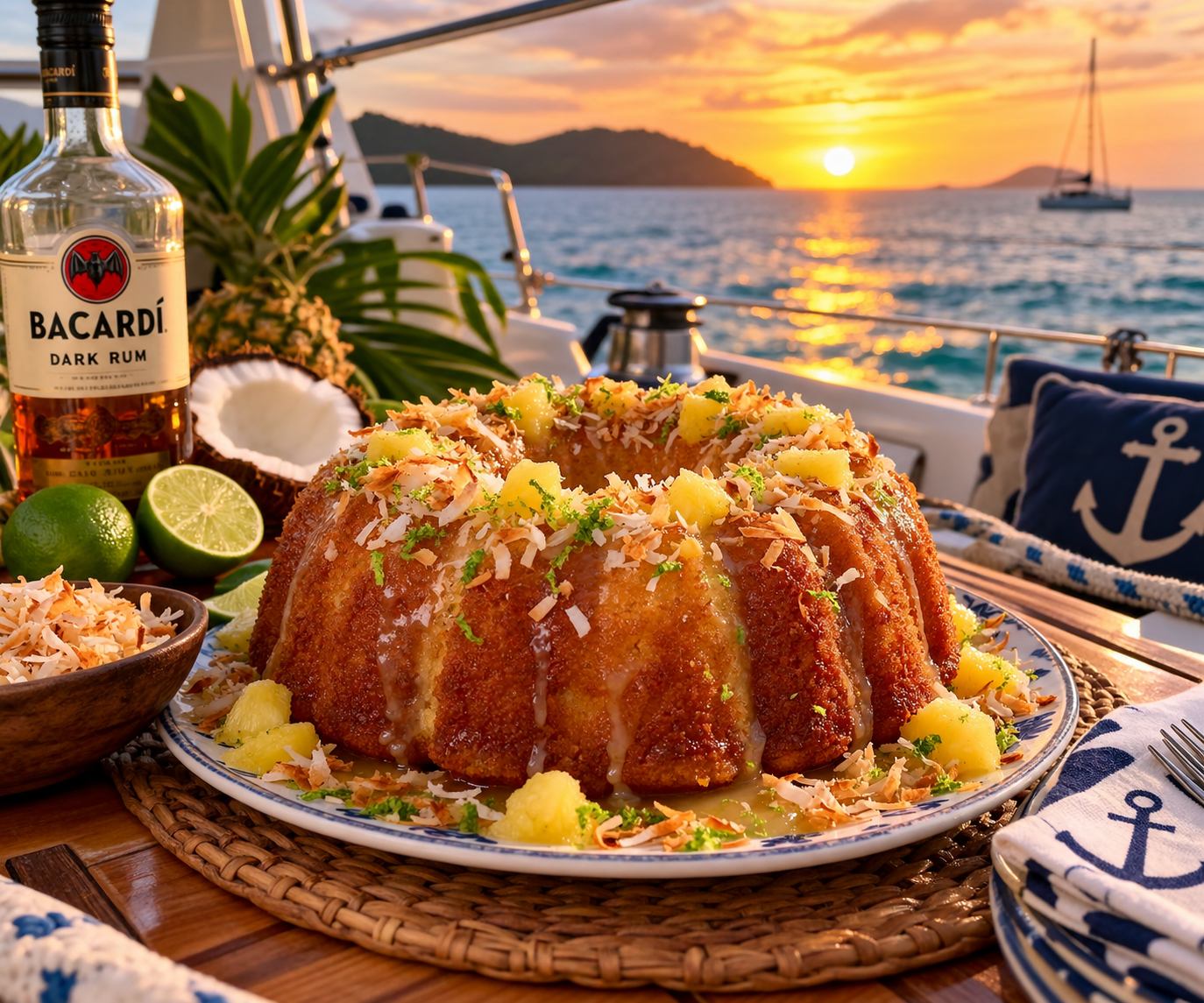
Serves 8 hungry sailors ⛵️
Galley difficulty: 🟢 Easy
Best served: After dinner, preferably with a sunset and questionable stories.
🍰 THE CAKE
Ingredients
- 1 box yellow cake mix, 15–18 oz
- 1 small box French vanilla instant pudding mix, 3.4 oz
- 4 large eggs 🥚
- ½ cup water
- ½ cup vegetable oil
- ½ cup dark rum 🍹
- ½ cup crushed pineapple, very well drained 🍍
- 1 tsp lime zest 🍋🟩
- ½ cup sweetened shredded coconut, lightly toasted 🥥
Gnomad Twist
The pineapple, lime and coconut turn the traditional rum cake into something that tastes like it wandered off the boat in the Caribbean and came back wearing sunglasses. 😎🌴
🥃 THE RUM & LIME GLAZE
- ½ cup butter
- ¼ cup water
- 1 cup sugar
- ½ cup dark rum
- 1 tbsp fresh lime juice
- 1 tsp lime zest
- Pinch of salt
Optional Gnomad Upgrade
- 2 tbsp toasted coconut
- Extra lime zest for finishing
- A few chunks of pineapple for the plate 🍍
⚓️ GALLEY DIRECTIONS
1. Get the boat's oven fired up 🔥
Preheat oven to 350°F.
Generously grease and flour a Bundt pan. Don't skimp here. A stuck Bundt cake can turn a peaceful anchorage into a maritime incident.
2. Build the batter
In a large bowl, combine:
Cake mix + pudding mix + eggs + water + oil + rum.
Mix until smooth.
Fold in the drained pineapple, lime zest and toasted coconut.
3. Into the harbor
Pour batter into the prepared Bundt pan.
Bake for approximately 50–60 minutes, or until a toothpick inserted in the center comes out clean.
Remove from the oven and let the cake cool in the pan for about 10–15 minutes.
Then carefully turn it out onto a plate.
🥃 MAKE THE LIQUID SUNSHINE
While the cake is baking, make the glaze.
In a saucepan, combine:
Butter + water + sugar + lime juice + lime zest + salt.
Bring to a gentle boil and cook for about 5 minutes, stirring frequently.
Remove from heat and carefully stir in the dark rum.
🔥 Galley note: The glaze contains alcohol, so don't assume cooking makes it completely alcohol-free. Keep the rum away from open flames and add it off the heat.
🏝️ THE GNOMAD SOAK
Here's where this becomes Gnomad Rum Cake rather than just rum cake.
While the cake is still warm, poke holes all over the top with a skewer or chopstick.
Slowly drizzle about ⅓ of the glaze over the cake.
Wait a few minutes.
Drizzle again.
Wait.
Drizzle again.
Let that gorgeous rum-lime goodness disappear into the cake.
Don't rush the soak. The cake is basically drinking the glaze. 🍹😂
🥥 THE FINAL GNOMAD TOUCH
Top with:
- Toasted coconut 🥥
- Fresh lime zest 🍋🟩
- A few tiny pieces of pineapple 🍍
For maximum island-galley points, serve with a dollop of whipped cream or vanilla ice cream.
And if you're feeling particularly adventurous:
🌴 Gnomad Sunset Sauce
Mix a spoonful of the remaining rum glaze with 1–2 tablespoons of pineapple juice and drizzle it around each slice.
Now we're sailing. ⛵️🌅
🧭 GNOMAD GALLEY NOTES
Boat-friendly: ⭐⭐⭐⭐⭐
Uses mostly shelf-stable ingredients, with eggs, lime and butter being the main fresh items.
Make-ahead: ⭐⭐⭐⭐⭐
This cake actually gets better after sitting for several hours as the glaze works its way through the cake.
Anchorage strategy: Make it in the afternoon, let it soak while you're enjoying sundowners, then serve after dinner.
Emergency provisioning: Keep the cake mix, pudding, rum, canned pineapple and coconut aboard. You've now got the makings of a dessert distress signal. 🚨🍰
🌅 THE GNOMAD RULE
Good food. Bright sunsets. Happy crew.
Rum is optional.
Dessert is not. 🍹🏴☠️⛵️
Gnomad Castaway Rum Cake
Sunsets Chased. Travel Far. Laugh Loud. Live Fully. 🌴⚓️🌅
Some Useful Freebies
These are the tools I actually use out here, and if you sign up using my links below you’ll usually get a little bonus or discount, while also supporting Gnomad Sailing at no extra cost
- Morning: LMNT Hydration 🍊
- Route planning/Navigation: Savvy Navvy + Orca 🌬️
- Teaching: NauticEd modules 📚
- Crew online: Saily + Surfshark 🌍
- Journaling the madness: reMarkable ✍️
- Training, books, and newsletter: The Boat Galley
- Starlink
⚓ Some Youtube channels I follow and highly recommend: